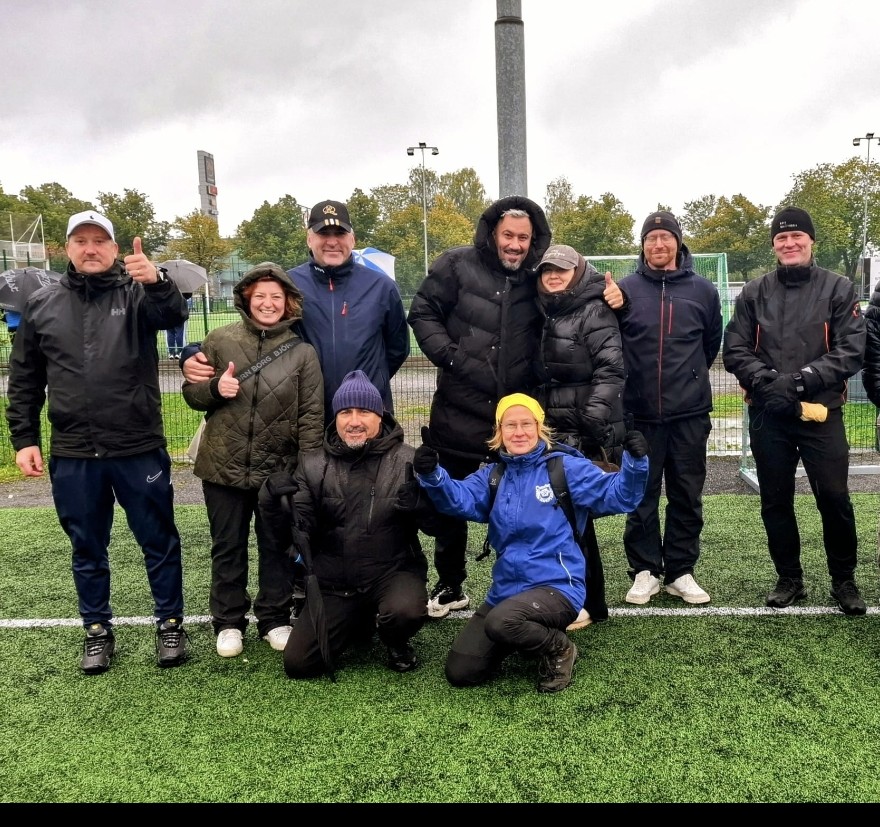
Behind almost every young athlete, there is a parent.❤️
A parent who rushes to get them to practice on time.🚗💨
A parent who stands on the sidelines, rain or shine.🌧️☀️
A parent who washes the kit, packs the equipment, organizes schedules, and gives up their own time so their child can pursue the sport they love. And pays for it all, too.😅
Parents are therefore already deeply involved in youth sports.
So perhaps the question is not:
How do we get parents involved?
But rather:
How do we make parental involvement as positive, safe and meaningful as possible for the young athlete?
A parent can be an athletic child’s greatest source of support — and sometimes also their greatest source of pressure.
Coaches see many different kinds of parents.
There are quiet supporters. There are enthusiastic cheerleaders. There are parents who want to help with everything — and who, above all, step into areas where their role does not extend.
And there are parents who care so deeply that, without realizing it, they may make their child feel that the sport is no longer truly theirs.
There is a fine line between support and pressure.
A young athlete should never feel that their worth depends on the goals they score, the minutes they play, or the outcome of a match.
They should know that their parents are proud of them simply because they are who they are — regardless of how they performed.
Let the coach coach — and be a safe place for your child to be themselves, especially in moments of disappointment.
One of the greatest gifts a parent can give a young athlete is a safe place away from the field.
Acceptance, appreciation and support at home give an athlete the opportunity to feel worthy even when they experience disappointment in sport.
A coach can challenge a player.
A coach can demand effort.💪
A coach can correct mistakes.
A coach gives direct feedback, and that feedback does not always feel good.
A parent can be the person who says:
“It’s okay. Tomorrow is a new day. I’m proud of you.”❤️
Young athletes need both.
They need adults who encourage them to develop and grow — and adults who remind them that they are valuable even when things do not go well.
Imagine a young footballer walking off the pitch after a difficult game.
What is the parent’s first reaction or question?
Usually, the reaction reflects how the child performed. The child sees the same disappointment on their parent’s face that the coach may have just put into words.
The athlete already knows how they performed. The coach may already have given them feedback.
The parent’s first task should therefore be to meet the child with warmth and save the analysis of the game for later — if and when the child wants to talk about it.
A parent can give their child a hug and allow them the space to process their own performance.
Every young athlete starts somewhere.
Somewhere, a spark is born.
And little by little, that spark can ignite in the parent, too.
They begin to feel connected to the team and enjoy the encounters with other parents on the sidelines. Friendships develop, and before long, the parent may find themselves caring just as much about the performances and experiences of the other children as they do about their own.
It is wonderful when a child’s sport becomes, at its best, something the whole family can share.
But…
It is important to allow the child to participate on their own terms, pursue their own potential and progress at their own pace.
We are not only raising athletes.
Most young athletes will not become professionals.
But every one of them will grow into something: a friend, a teammate, a young adult who hopefully, after their own playing career, will want to remain involved in the sport in some way.
From the very beginning, a parent can show through their own example what sport can be at its best.
It is about growth, community, discovering your own limits and a sense of belonging.
It is about falling down and getting back up.
A parent’s role becomes even more important as a young athlete’s sport becomes more goal-oriented and they encounter disappointment.
How can a parent who is deeply passionate about the sport themselves — and who sometimes experiences disappointment too — help a young athlete find motivation again, cope with setbacks and grow as an athlete?
A parent does not need to understand everything about the sport.
They do not need to know every tactical detail.
They do not need to understand every decision made by the coach.
They do not need to analyze every touch of the ball.
A parent’s role can be much simpler — and at the same time, much more important.
Be present. ❤️
Listen. 👂
Encourage. 👏
Believe. ✨
Too much pressure can turn passion into an obligation.
Too much criticism can turn mistakes into something to fear.
Too much focus on results can make a young athlete forget why they fell in love with the sport in the first place.
The role of parents and coaches is to work together to make sure that love for the sport remains.
Youth sports can teach courage, responsibility, perseverance, cooperation, and how to handle both success and disappointment.
Youth sports matter.⚽️❤️
And the greatest victory in sport is not necessarily the trophies or the success.
The greatest victory is a child or young person who leaves their team feeling confident, carrying wonderful memories and with a love for the sport still in their heart.
So how can a parent truly be involved?
Trust the coach.
Offer your help.
Be open and honest.
Work together for the good of the team.
Listen more than you lecture.
Ask questions that show interest — not pressure.
And above all:
Let the sport belong to your child, and you will probably enjoy it more yourself, too.
Because one day, the car rides to practice will come to an end.
The dirty boots will no longer be waiting in the hallway.
Weekend tournaments will become memories.
And hopefully, what remains is not simply a memory of the goals scored or the games won.
But a feeling:
“I loved playing.”
“My parents encouraged me and supported me in an amazing way.”
The role of parents in a young athlete’s journey is important.
A love for sport — and the spark that comes with it — can teach us so much about life.
That is the spark we, as adults, should protect. ❤️🔥